
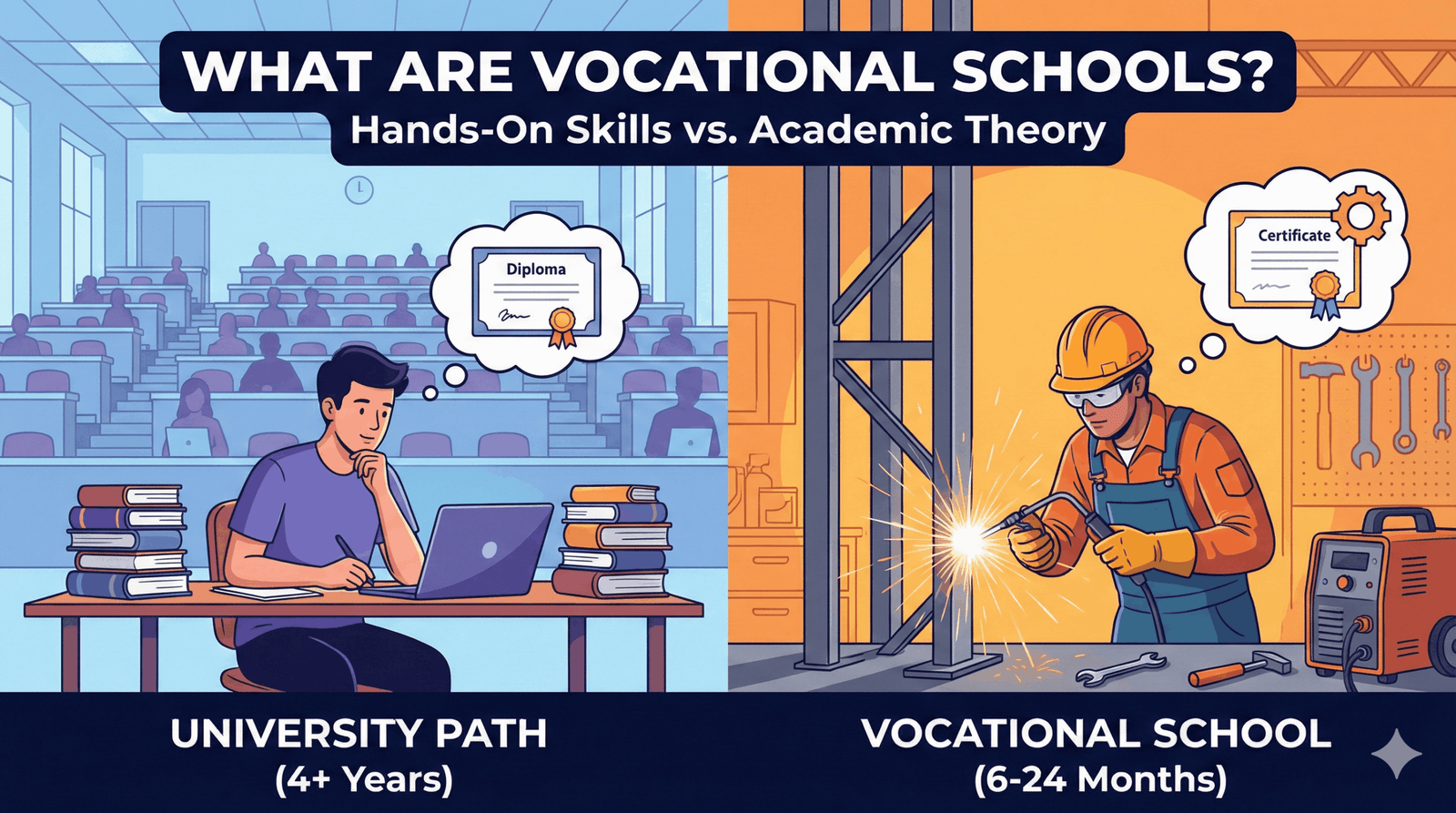
For decades, the narrative was simple: High School → University → Success. But in 2026, with tuition skyrocketing and skilled trades in desperate demand, that narrative is shifting. Enter the Vocational School (also known as a Trade or Technical School).
These aren’t “consolation prizes” for people who didn’t get into university. They are high-speed launchpads for some of the most stable and lucrative careers in the modern economy. But what exactly are they, and how do they differ from a traditional college?A vocational school is an educational institution designed to teach you the specific skills needed for a particular job.
Unlike a traditional university, where you spend two years studying “General Education” (history, philosophy, literature) before touching your major, vocational schools cut the fluff. They focus entirely on hands-on training for a specific trade or occupation.
The Key Difference:
- University: Teaches you how to think critically about broad subjects. (Outcome: Bachelor’s Degree)
- Vocational School: Teaches you how to do a specific job. (Outcome: Certificate, Diploma, or Associate Degree)
What Can You Study? (It’s Not Just Plumbing)
While skilled trades are the backbone of vocational education, the options have expanded significantly. Common programs include:
- Skilled Trades: Electrician, HVAC Technician, Welder, Plumber, Carpenter.
- Healthcare: Dental Hygienist, Medical Assistant, Radiology Tech, Licensed Practical Nurse (LPN).
- Technology: Cybersecurity Specialist, IT Support, Coding Bootcamps (often fall under this umbrella).
- Creative & Service: Culinary Arts, Cosmetology, Graphic Design, Automotive Repair.
The 3 Massive Advantages of Vocational School
1. Speed (Time is Money)
A Bachelor’s degree takes 4 years (often 5 or 6). Most vocational programs take 6 months to 2 years. You enter the workforce years earlier than your university peers, meaning you start earning a salary while they are still writing essays.
2. Cost (No Crushing Debt)
The average vocational program costs significantly less than a 4-year university degree. Many trade schools cost between $3,000 and $15,000 total. Compare that to the $100,000+ price tag of many private universities, and the financial logic is undeniable.
3. Job Security (The “Robot-Proof” Factor)
AI can write code. It can write articles. But AI cannot drive to your house and fix a burst pipe at 2:00 AM. It cannot install a new HVAC system during a heatwave. Vocational careers are often “hands-on” and location-specific, making them highly resistant to automation and outsourcing.
Is Vocational School Right for You?
This path isn’t for everyone. Here is a quick checklist:
You might thrive in vocational school if:
- You learn by doing, not just reading or listening to lectures.
- You want a clear, direct path to a specific job.
- You hate the idea of spending 4 years in a classroom.
- You want to minimize student loan debt.
You might prefer a traditional university if:
- You are unsure what career you want and need time to explore.
- Your desired career legally requires a Bachelor’s degree (e.g., Doctor, Lawyer, Professor, Scientist).
- You want the “college experience” (dorms, sports, social clubs).
The Final Verdict
The stigma around vocational schools is dead. In an economy that desperately needs skilled workers, trade schools offer a pragmatic, dignified, and often lucrative path to success.
Whether you are a high school graduate or a 30-something looking for a career change, don’t overlook the trade school route. It might just be the smartest investment you ever make.