
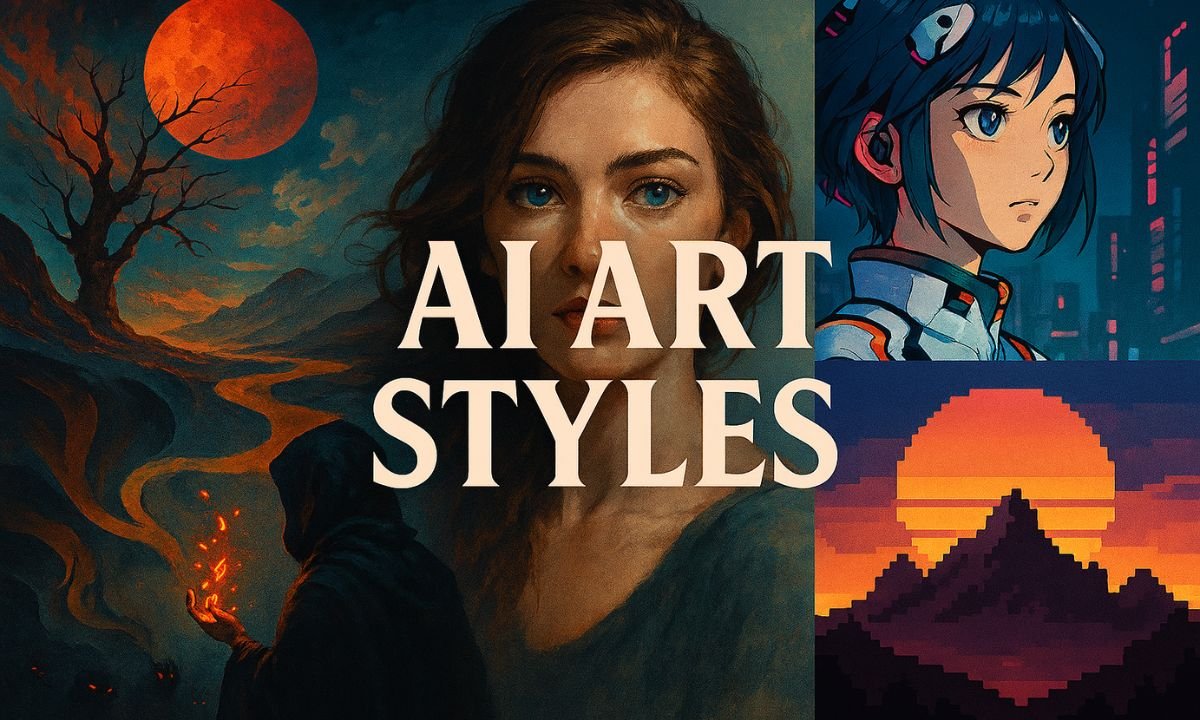
Explore the visual languages that shape AI creativity
AI image generation tools like Midjourney, Adobe Firefly, DALL·E, and Stable Diffusion allow creators to produce stunning visuals in virtually any style. But the magic lies in how you guide the model. By specifying an art style—whether it’s “cyberpunk,” “Baroque,” or “watercolor”—you shape the tone, texture, and emotional impact of the output.
Here’s a breakdown of popular and powerful styles you can use across platforms.
Popular Art Styles for AI Prompts
| Style Type | Description & Use Case |
|---|---|
| Photorealism | Hyper-realistic visuals ideal for product mockups, architecture, and fashion |
| Surrealism | Dreamlike, abstract scenes—great for concept art and storytelling |
| Cyberpunk | Futuristic, neon-lit dystopias—perfect for sci-fi and tech themes |
| Baroque | Ornate, dramatic compositions—used in fantasy and historical settings |
| Watercolor | Soft, fluid textures—great for children’s books and gentle aesthetics |
| Pixel Art | Retro gaming style—ideal for indie game design and nostalgic visuals |
| Anime | Stylized characters and backgrounds—popular for fan art and storytelling |
| Low Poly | Geometric simplicity—used in 3D modeling and minimalist design |
| Ink Sketch | Monochrome linework—great for editorial illustrations and concept drafts |
| Fantasy Realism | Detailed mythical scenes—perfect for RPGs and book covers |
Sources:
Why Style Matters
- Style sets mood: A noir style evokes mystery; watercolor suggests softness.
- Style guides output: AI interprets prompts differently depending on style cues.
- Style defines audience: Pixel art appeals to gamers; photorealism suits marketers.
Tips for Using Styles in Prompts
- Combine styles: “Cyberpunk + watercolor” creates unique contrasts.
- Add modifiers: Use “in cinematic lighting” or “with dramatic shadows” for depth.
- Reference artists: Try “in the style of Van Gogh” or “like Moebius” for specific flair.
- Test variations: Run the same prompt with different styles to compare results.
Frequently Asked Questions
1. Why should I specify an art style in AI prompts?
Art styles guide the AI’s interpretation, helping you achieve visuals that match your intended tone, texture, and audience.
2. Which AI tools support style-based image generation?
Midjourney, Adobe Firefly, DALL·E, and Stable Diffusion all support style modifiers in prompts, though each interprets them differently.
3. What are the most popular styles used in AI art?
Photorealism, surrealism, cyberpunk, watercolor, anime, pixel art, and fantasy realism are among the most commonly used.
4. Can I combine multiple styles in one prompt?
Yes. Combining styles like “Baroque + cyberpunk” or “watercolor + surrealism” can produce unique hybrid outputs.
5. How do I reference specific artists in prompts?
Use phrases like “in the style of Van Gogh” or “like Moebius” to guide the AI toward a particular aesthetic.
Final Thought
Art styles are more than aesthetic—they’re strategic. Whether you’re building a brand, telling a story, or prototyping a game, the right style unlocks the full potential of AI creativity.