
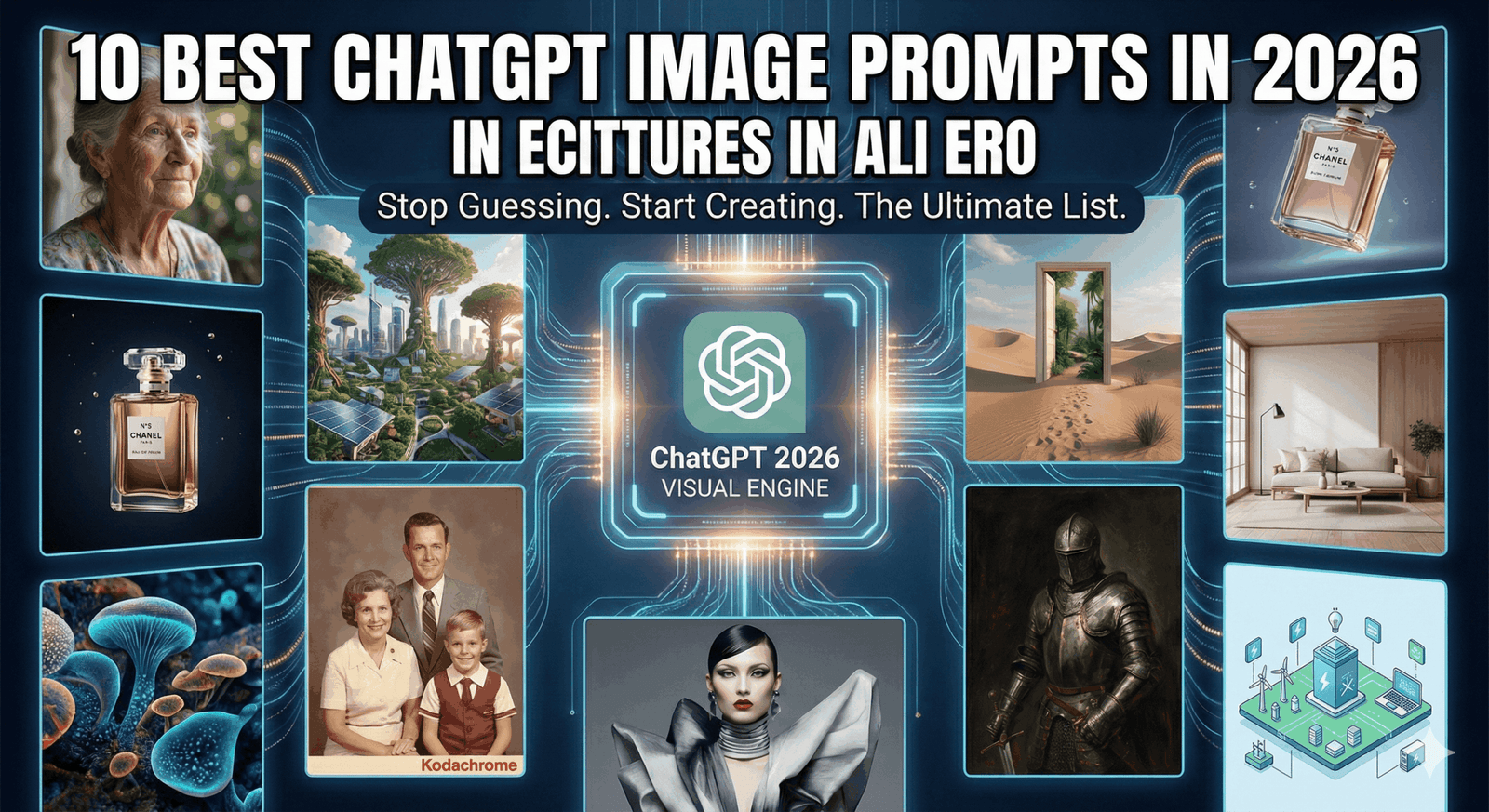
By 2026, the novelty of generating an image with AI has worn off. We know ChatGPT (powered by the deeply integrated DALL-E 3 model) can create images. The challenge now isn’t just getting an image; it’s getting the exact image you envisioned, with professional-grade fidelity.
The days of writing three-paragraph descriptions hoping for a decent result are over. In 2026, ChatGPT’s visual understanding is nuanced. The best results come from prompts that are concise, stylistically specific, and understand the language of photography and design.
If your current outputs feel generic or “too AI,” your prompts need an update.
Below are the 10 best ChatGPT image prompts to use right now, categorized by style. They are designed to push the model’s current capabilities to their limit. Just copy, paste, and tweak the details to fit your needs.
The “2026 Mindset” for Prompts
Before the list, remember the golden rule of 2026 AI generation: Style > Description.
Don’t just tell ChatGPT what is in the image; tell it how the image should look. Use terms from cinematography, art history, and professional photography. ChatGPT now understands vibe as well as it understands objects.
1. The Hyper-Realistic Candid Portrait
Getting faces right was the struggle of the early 2020s. Now, the challenge is removing that “perfectly smooth” AI look to create something gritty and human.
The Prompt:
“A candid, documentary-style photograph of an elderly fisherman laughing on a dock in Maine. Shot on 35mm film, natural overcast lighting, visible film grain, shallow depth of field focused on his eyes. Every wrinkle and texture is highly detailed. Kodak Portra 400.”
- Why it works in 2026: Specifying film stock (Kodak Portra 400), camera type (35mm), and lighting (overcast) forces ChatGPT to abandon its default glossy digital look for something authentic and imperfect.
2. The Cinematic Sci-Fi Landscape (Solarpunk)
Sci-fi used to mean dark and neon. The trend in 2026 is toward optimistic, green futures. This prompt creates sprawling, detailed worlds.
The Prompt:
“A wide-angle landscape photograph of a bustling solarpunk city integrated seamlessly into colossal ancient redwood trees. Glass and timber architecture covered in greenery, airships floating in the distance, golden hour light. Studio Ghibli inspired aesthetic but photorealistic.”
- Why it works: Combining a specific genre (“solarpunk”) with an artistic muse (“Studio Ghibli inspired”) and a realism constraint (“but photorealistic”) creates a unique, stunning visual tension.
3. The High-End Commercial Product Shot
Need assets for an e-commerce mockup? ChatGPT is now a world-class studio photographer.
The Prompt:
“A luxury commercial product shot of a sleek, sculptural perfume bottle made of recycled ocean plastic and amber glass. It is floating in a zero-gravity environment surrounded by water droplets and botanicals. Studio lighting, 8k resolution, incredibly detailed textures. The background is a soft gradient of teal and orange.”
- Why it works: Words like “sculptural,” “luxury,” and “zero-gravity” immediately elevate the composition above a standard tabletop photo.
4. The Abstract Texture Mashup
Sometimes you don’t need a subject; you need a feeling or a background. This prompt pushes the AI’s ability to render complex, contrasting materials.
The Prompt:
“A macro photograph exploring the texture where bioluminescent fungi meet molten bismuth metal. An explosion of iridescent jewel tones, crystalline structures, and organic decay. Incredibly high detail, tactile quality.”
- Why it works: “Macro photograph” and “tactile quality” tell the AI to focus entirely on the microscopic details of the materials.
5. The Minimalist Architectural “Vibe”
In 2026, minimalist design is about warmth, not sterility. This prompt captures a specific interior design mood perfectly.
The Prompt:
“Interior design photograph of a Japandi style living room. Calm, neutral earth tones, natural linen sofa, raw wood coffee table, large paper Noguchi lamp. Wabi-sabi aesthetic. Soft, diffused morning light streaming from a large window. Minimalist and peaceful.”
- Why it works: Using specific design terms like “Japandi,” “Noguchi lamp,” and “Wabi-sabi” acts as shorthand for a complex visual style that ChatGPT perfectly understands.
6. The Nostalgic “Found Photo”
Perfect for storytelling or creating mood boards that feel historically grounded.
The Prompt:
“A faded Kodachrome photograph from the 1970s showing a family picnic by a vintage station wagon. Warm color cast, slight light leaks, rounded corners, and a slightly blurry, authentic amateur feel.”
- Why it works: Asking for “imperfections” like light leaks, blurriness, and faded colors prevents the AI from making the image too perfect, selling the illusion of age.
7. The Editorial Fashion Spread
This moves beyond a simple picture of clothes into high-concept fashion photography.
The Prompt:
“A full-body avant-garde fashion photograph representing the concept of ‘digital nature.’ The model wears a sculptural outfit made of woven fiber optics and dried leaves. Shot in a stark white studio with dramatic, high-contrast lighting. The pose is dynamic and angular. Vogue editorial style.”
- Why it works: Combining abstract concepts (“digital nature”) with a specific publication style (“Vogue editorial“) gives the AI clear direction on pose, lighting, and attitude.
8. The Detailed Infographic Base
While ChatGPT isn’t perfect at text yet, it’s incredible at creating the structure for infographics that you can later edit.
The Prompt:
“A clean, modern isometric illustration serving as a base for an infographic about ‘The Future of Sustainable Energy.’ Show interconnected floating islands representing solar, wind, hydro, and geothermal power. Use a color palette of blues, greens, and clean white. No text, just the visual elements.”
- Why it works: Specifying “isometric illustration” and “no text” ensures you get a usable, clean graphic asset rather than a messy attempt at typography.
9. The Dark Fantasy “Oil Painting”
Moving away from photography, this prompt leverages art history to create moody, illustrative work.
The Prompt:
“A dark fantasy oil painting in the style of Rembrandt, showing a weary knight resting by a campfire in a ruined temple. Deep shadows, rich textures, dramatic chiaroscuro lighting. Thick visible brushstrokes.”
- Why it works: Invoking a master painter (“Rembrandt”) and a specific technique (“chiaroscuro”) instantly defines the lighting, mood, and texture of the final image.
10. The Surrealist Dreamscape
When you want to break the laws of physics and create something truly bizarre and beautiful.
The Prompt:
“A surrealist photograph depicting a giant doorway standing freely on a desert dune. Through the open doorway, you can see a lush, rainy jungle ecosystem. The sky above the desert is filled with floating antique clocks. Influenced by Salvador Dalí. Dreamlike quality.”
- Why it works: Surrealism requires specific, contrasting elements. A door in a desert leading to a jungle provides the central anchor for the dream logic.
How to Customize These
Think of these prompts as recipes. You can swap the ingredients.
- Take prompt #1, but change the subject from an “elderly fisherman” to a “young mechanic in Tokyo.”
- Take prompt #5, but change the style from “Japandi” to “Maximalist Bohemian.”
The structure of the prompt—the lighting, camera specs, and artistic references—is what matters. Master that structure, and you can create anything in 2026.